|
 |
| |
|
| |
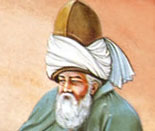
MEVLANA CELALEDDIN RUMI

|
| |
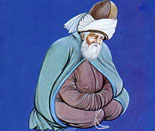
Mevlana Celaleddin Rumi, also known as Rumi, was a
philosopher and a mystic of Islam. It’s important to note that
Rumi’s doctrines are not associated with orthodox Muslims. Rumi’s
advocated tolerance that was unlimited in its reach, positive
reasoning, charity, and an awareness of the self and world through
love. He taught that all religions are united in their links to
truth. Rumi is a symbol of peace and tolerance, and thus, is a key
figure not only to Islam but to the world’s greatest thinkers.
The masnavi is an influential work that Melvana is most famous for
penning. The story says that when Mevlana was working as an
instructor in a religious school, he was lecturing when he noticed a
vendor pass. He stopped the vendor, sampled his goods, and left with
him, vanishing. Years later, Mevlana returned and would speak only
in rhymed Persian couplets, and these poems became the Masnavi.
Mevlana was born on the 30th of September, 1208, in Balkh, which was
in what is now known as present day Afghanistan. He passed away on
the 17th of December in the year 1273 in Konya, which is now known
as present day Turkey.
|
 |
|
| |
|
|
| |
 |
|
| |
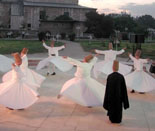
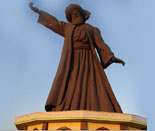
Following Melvana’s death, his son and followers
founded Mawlawiyah Sufi Order, a type of Sufism, also known as the
order of the
Whirling Dervishes. Sema, a key component to this order, is key
part of those who follow Mevlana’s teachings and an integral
component to Turkish culture. The whirling dervish is said to cause
the mind to participate or identify the shared similarity or
connection between all other beings.
Mevlana, who summarized his life with the words, "I was raw, cooked
and then burned" died on Sunday, December 17,1273. He had willed his
burial prayers to be led by Sadrettin Konevi. However, Sadrettin
Konevi was completely shattered with the death of Mevlana whom he
loved greatly, and fainted at the ceremony. The prayer was then led
by Kadı Sıraceddin.
Mevlana believed the day of death to be a day of rebirth. Death
would take him to his beloved; that is, the God. With this believe
he was referring to the day of death as "Şeb-i Arus" which means
wedding day or the bridal night and willed his friends not to cry
and wail after him.
"When we are dead, do not turn your eyes to the ground, seeking my
grave! My grave will be in the hearts of the wise" Hz. Mevlana |
 |
|
| |
|
|
| |
 |
|
| |
|
|
| |
|
|
<-Back |
|
|
 |
|
 CITIES